# 阅读图解React笔记2
8 min read
Table of Contents
本文仅仅是阅读 图解 React 原理系列 的笔记,了解更多内容请查看原文链接。
reconciler 运作流程的笔记。
概览
react-reconciler 主要的作用有 4 个方面:
- 输入:暴露 api 函数(如 scheduleUpdateOnFiber),供给其他包调用。
- 注册调度任务:与调度中心(scheduler)交互,注册调度任务 task,等待任务回调。
- 执行任务回调:在内存中构造出 fiber 树,同时与渲染器交互,在内存中创建出与 fiber 对应的 DOM 节点。
- 输出:与渲染器交互,渲染 DOM 节点。
主要功能代码集中于 react-reconciler/src/ReactFiberWorkLoop.new.js(v18.2.0),可以用图示表示:
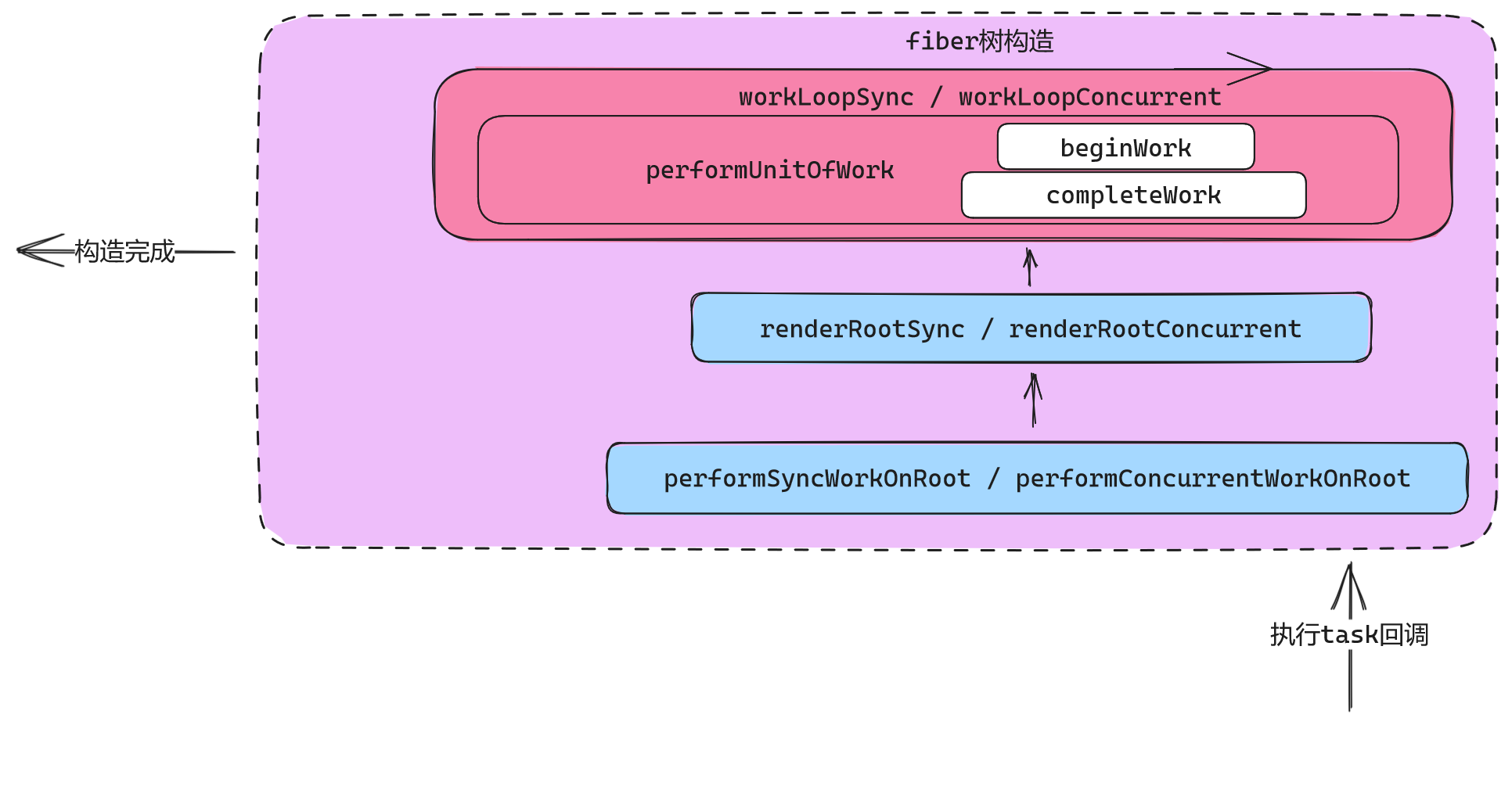
输入
在 ReactFiberWorkLoop.js 中,承接输入函数的只有 scheduleUpdateOnFiber。在 react-reconciler 对外暴露的 api 函数中,只要涉及到需要改变 fiber 的操作,最后都会间接调用 scheduleUpdateOnFiber。
// 唯一接收输入信号的函数export function scheduleUpdateOnFiber( root: FiberRoot, fiber: Fiber, lane: Lane, eventTime: number) { if ((executionContext & RenderContext) !== NoLanes && root === workInProgressRoot) { //... } else { //... ensureRootIsScheduled(root, eventTime); //... }}注册调度任务
与输入环节紧密相连,scheduleUpdateOnFiber 函数之后,立即进入 ensureRootIsScheduled 函数。
// 该函数为 root 注册一个调度任务,在 root 下只能存在一个任务。// 如果有任务已经调度,会检测确保现有的任务的优先级与 root 的下一个任务优先级相同。// 该函数在每次更新和退出任务之前都会被调用。function ensureRootIsScheduled(root: FiberRoot, currentTime: number) {  // 前半部分:判断是否需要注册新的调度  const existingCallbackNode = root.callbackNode;
  // 检测是否存在有通道(lanes)还在等待,如果有,将其标记为过期,以便接下来处理。  markStarvedLanesAsExpired(root, currentTime);
  // 判断下个通道(lanes)的执行和优先级  const nextLanes = getNextLanes(    root,    root === workInProgressRoot ? workInProgressRootRenderLanes : NoLanes  );
  if (nextLanes === NoLanes) {    if (existingCallbackNode !== null) {      cancelCallback(existingCallbackNode);    }    root.callbackNode = null;    root.callbackPriority = NoLanes;    return;  }
  // 使用最高的优先级通道代表回调的优先级  const newCallbackPriority = getHighestPriorityLane(nextLanes);
  // 检查是否存在已有的任务  const existingCallbackPriority = root.callbackPriority;  if (existingCallbackPriority === newCallbackPriority) {    return;  }
  if (existingCallbackNode !== null) {    cancelCallback(existingCallbackNode);  }
  // 后半部分:注册一个新的调度任务  let newCallbackNode;  if (newCallbackPriority === SyncLane) {    if (root.tag === LegacyRoot) {      scheduleLegacySyncCallback(performSyncWorkOnRoot.bind(null, root));    } else {      scheduleSyncCallback(performSyncWorkOnRoot.bind(null, root));    }    if (supportsMicrotasks) {      scheduleMicrotask(() => {        flushSyncCallbacks();      });    } else {      scheduleCallback(ImmediateSchedulerPriority, flushSyncCallbacks);    }    newCallbackNode = null;  } else {    let schedulerPriorityLevel;    switch (lanesToEventPriority(nextLanes)) {      case DiscreteEventPriority:        schedulerPriorityLevel = ImmediateSchedulerPriority;        break;      case ContinuousEventPriority:        schedulerPriorityLevel = NormalSchedulerPriority;        break;      case IdleEventPriority:        schedulerPriorityLevel = IdleEventPriority;        break;      default:        schedulerPriorityLevel = NormalSchedulerPriority;        break;    }    newCallbackNode = scheduleCallback(      schedulerPriorityLevel,      performConcurrentWorkOnRoot.bind(null, root)    );  }
  root.callbackPriority = newCallbackPriority;  root.callbackNode = newCallbackNode;}
ensureRootIsScheduled 的逻辑分为 2 部分:
- 前半部分:判断是否需要注册新的调度(如果无需新的调度,退出函数)
- 后半部分:注册调度任务
- performSyncWorkOnRoot 和 performConcurrentWorkOnRoot 都封装到了任务回调(scheduleCallback)中
- 等待调度中心执行任务,任务其实就是执行 performSyncWorkOnRoot 或 performConcurrentWorkOnRoot
执行任务回调
performSyncWorkOnRoot 的逻辑分为 3 部分:
- fiber 树构建
- 异常处理:有可能 fiber 树构建过程中出现异常
- 调用输出
// 不经过 scheduler 的同步任务入口function performSyncWorkOnRoot(root) {  flushPassiveEffects();
  // 1. fiber 树构建  let lanes = getNextLanes(root, NoLanes);  if (!includesSomeLane(lanes, SyncLane)) {    ensureRootIsScheduled(root, now());    return null;  }
  let exitStatus = renderRootSync(root, lanes);
  // 2. 异常处理的:有可能 fiber 构建过程中实现异常  if (root.tag !== LegacyRoot && exitStatus === RootErrored) {    //...  }
  // 3. 渲染 Fiber 树  const finishedWork: Fiber = (root.current.alternate: any);  root.finishedWork = finishedWork;  root.finishedLanes = lanes;  commitRoot(root, workInProgressRootRecoverableErrors, workInProgressTransitions);
  // 退出之前,确保下一个回调调度处于 pending 状态。  ensureRootIsScheduled(root, now());  return null;}
performConcurrentWorkOnRoot 的逻辑与 performSyncWorkOnRoot 的不同之处在于,对于可中断渲染的支持:
- 调用 performConcurrentWorkOnRoot 函数时,首先检查是否处于渲染过程中,是否需要恢复上一次渲染。
- 如果本次渲染被中断,最后返回一个新的 performConcurrentWorkOnRoot 函数,等待下一次调用。
// 这是每一个并发任务的入口。function performConcurrentWorkOnRoot(root) {  // 1. 刷新 pending 状态的被动副作用,以防它们安排额外的工作。  const originalCallbackNode = root.callbackNode;  const didFlushPassiveEffects = flushPassiveEffects();  if (didFlushPassiveEffects) {    if (root.callbackNode !== originalCallbackNode) {      return null;    } else {      // 当前任务不会被取消,继续    }  }
  // 2. 获取本次渲染的优先级  let lanes = getNextLanes(    root,    root === workInProgressRoot ? workInProgressRootRenderLanes : NoLanes  );  if (lanes === NoLanes) {    return null;  }
  // 构建 fiber 树  let exitStatus = renderRootConcurrent(root, lanes);  if (exitStatus !== RootInProgress) {    if (exitStatus === RootErrored) {      //...    }    if (exitStatus === RootFatalErrored) {      //...    }    if (exitStatus === RootDidNotComplete) {      markRootSuspended(root, lanes);    } else {      const renderWasConcurrent = !includesBlockingLane(root, lanes);      const finishedWork: Fiber = (root.current.alternate: any);      root.finishedWork = finishedWork;      root.finishedLanes = lanes;      // 渲染 fiber 树      finishConcurrentRender(root, exitStatus, lanes);    }  }
  ensureRootIsScheduled(root, now());
  if (root.callbackNode === originalCallbackNode) {    // 渲染被阻断,返回一个新的 performConcurrentWorkOnRoot 函数,等待下一次调用    return performConcurrentWorkOnRoot.bind(null, root);  }  return null;}
输出
在输出阶段,commitRoot 的实现逻辑在 commitRootImpl 函数上,其主要逻辑是处理副作用队列,将最新的 fiber 树结构反映到 DOM 上。
function commitRootImpl(  root: FiberRoot,  recoverableErrors: null | Array<CapturedValue<mixed>>,  transtions: Array<Transition> | null,  renderPriorityLevel: EventPriority) {  // 设置局部变量  const finishedWork = root.finishedWork;  const lanes = root.finishedLanes;
  // 清空 FiberRoot 对象上的属性  root.finishedWork = null;  root.finishedLanes = NoLanes;  root.callbackNode = null;
  // 提交阶段  let firstEffect = finishedWork.firstEffect;  if (firstEffect !== null) {    const prevExecutionContext = executionContext;    executionContext |= CommitContext;    // 阶段1: dom突变之前    nextEffect = firstEffect;    do {      commitBeforeMutationEffects();    } while (nextEffect !== null);
    // 阶段2: dom突变, 界面发生改变    nextEffect = firstEffect;    do {      commitMutationEffects(root, renderPriorityLevel);    } while (nextEffect !== null);    root.current = finishedWork;
    // 阶段3: layout阶段, 调用生命周期componentDidUpdate和回调函数等    nextEffect = firstEffect;    do {      commitLayoutEffects(root, lanes);    } while (nextEffect !== null);    nextEffect = null;    executionContext = prevExecutionContext;  }  ensureRootIsScheduled(root, now());  return null;}
核心逻辑分为 3 个步骤:
-
commitBeforeMutationEffects
- dom 变更之前,主要处理副作用队列中带有 Snapshot, Passive 标记的 fiber 节点。
-
commitMutationEffects
- dom 变更,界面得到更新,主要处理副作用队列中带有 Placement, Update, Deletion, Hydrating 标记的 fiber 节点。
-
commitLayoutEffects
- dom 变更后,主要处理副作用队列中带有 Update, Callback 标记的 fiber 节点。